What is Demand Generation? Turning Brands from “Searched” to “Seen”
In an era where digital advertising is becoming increasingly competitive, relying solely on consumer-initiated searches is no longer enough to support a brand’s growth. Businesses must take the initiative to place their brand in front of potential customers instead of waiting to be found. This is precisely where Demand Generation plays a crucial role.

In the past digital marketing landscape, brand growth depended on being “searched”: consumers actively entered keywords to express their intent, and brands responded with targeted keyword ads. However, Google’s latest advertising trends indicate that with the rise of AI tools like ChatGPT, user search behavior is undergoing major changes. Many brands are finding that organic search traffic is not what it used to be. Consumers’ exploratory behavior has become fragmented and unpredictable, rendering the traditional sales funnel outdated.
1. What is Demand Generation?
It’s the strategy of placing your brand into the consumer’s field of vision before they generate a specific need. In other words, brands should proactively create dialogue and appeal, rather than passively wait to be discovered. The core of this marketing approach is about being seen—sparking interest, curiosity, or affinity toward the brand before consumers even realize they have a need. Unlike traditional demand response, this is about planting a seed in the consumer’s mind that can grow over time.
Consumers today don’t shop or browse through a single platform or channel. They might watch videos during their commute, scroll through product pages at lunch, or research travel options before bed. Purchasing decisions stretch across time and platforms. If brands focus only on search or conversion stages, they risk missing a large share of potential customers. Demand Generation helps expand reach and boost brand recall among unfamiliar audiences—an ideal strategy for new market entrants or mature brands seeking growth breakthroughs.
One of the significant advantages of programmatic advertising lies in its automated transaction process, which streamlines deal-making and facilitates performance tracking for both advertisers and publishers. Programmatic advertising is characterized by real-time bidding and dynamic eCPM (effective cost per mille), features that effectively reduce the need for manual interventions. Let us now examine the comprehensive transaction process in detail:
Core Strategies of Demand Generation
2. The Shift and Challenges in Consumer Behavior
Unlike in the past, consumers now often bypass traditional search engines. With tools like ChatGPT, some now prefer asking situational questions to AI, receiving concise, sourced answers. This streamlines the information-gathering process and reduces the need to enter multiple keywords and sift through results. As consumers become less reliant on keyword searches, this disrupts traditional digital advertising, particularly Google’s search ads. With fewer searches, ad impressions decrease, driving up cost-per-click.
3. Impact on Digital Advertising & How to Respond
(1) From Keyword-Based to Phrase-Based Targeting
Ads can no longer rely on single keywords. As consumers use more contextual, scenario-driven queries, ad systems need to understand and infer intent through context.
(2) From Static to Dynamic Creatives
When consumer intent is still unclear, emotional, story-driven, and visually engaging content, not just discounts, captures attention. Creatives must be rapidly generated, tested, and matched to various scenarios.
(3) Shift in Performance Metrics
Traditional click-through and conversion rates are no longer sufficient when demand hasn’t yet formed. Brands need a robust data infrastructure to measure long-term value through cross-channel attribution, incrementality testing, and memory impact.
4. Combining Demand Generation with Ad Strategy
(1) Use DSP for Proactive Exposure: Through DSP, visually engaging ads can be delivered across display networks and platforms to capture attention before search intent arises.
(2) Leverage DKT to Expand Reach: DKT helps analyze context and discover emerging keywords, allowing brands to infer interests and reach audiences who haven’t explicitly searched for their products or services.
(3) Create High-Quality Creatives: Invest in compelling videos, visuals, and copywriting to capture interest and stand out from the crowd.
(4) Omnichannel Integration: Combine DSP, DKT, and other channels (social media, SEO, etc.) to build a comprehensive Demand Generation strategy.
(5) Data-Driven Optimization: Use DSP and DKT data to refine campaigns continually. AI-driven solutions help maximize ad ROI.
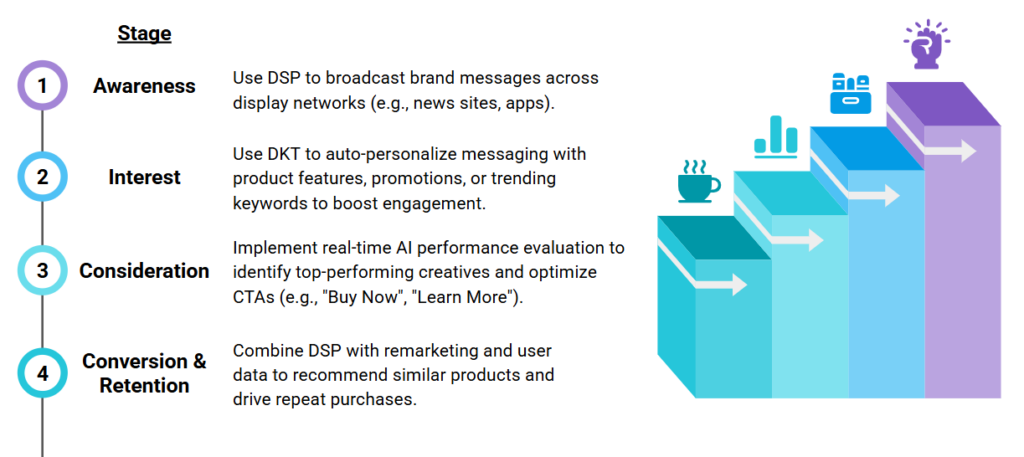
(6) Advertising Strategy in Four Phases:
5. Summary
In the AI era, digital advertising must be more proactive, not reactive. Demand Generation strategies are essential for sparking curiosity and emotional resonance before a consumer even thinks about searching. By integrating the capabilities of DSP and DKT, brands can attract potential customers early, establish connections before the search begins, and continuously optimize using data to gain a competitive edge in a crowded market.
什麼是 Demand Generation? 讓品牌從「被搜尋」變成「被看見」
在數位廣告日益競爭的時代,僅靠消費者主動搜尋已不足以支撐品牌的成長曲線,企業應主動出擊,讓品牌出現在潛在客群的眼前,而不再只是等著被搜尋!這正是 Demand Generation策略發揮關鍵影響力的時刻。

在過去的數位行銷生態中,品牌的成長仰賴「被搜尋」:消費者主動輸入關鍵字、展現意圖,品牌再藉由關鍵字廣告精準切入。Google 最新廣告趨勢指出,隨著 ChatGPT 等 AI 工具的興起,用戶的搜尋方式與行為產生大幅變化,導致許多品牌發現自然搜尋流量不如以往。消費者的探索行為變得破碎且難以預測,傳統的銷售漏斗早已在這時代不敷使用。
1. 什麼是 Demand Generation?
在消費者產生需求之前,先讓品牌進入他們的視野與思考。換句話說,品牌不是等著被搜尋,而是主動出擊,創造對話與吸引力。這種行銷策略的核心在於「被看見」,讓消費者在還未明確意識到自己有需求前,先對品牌產生興趣、認同或好奇,進而觸發進一步的行動。不同於傳統的需求回應,而是在消費者心中種下種子,等待在適當時機發芽。
消費者的消費行為早已不再侷限於單一平台或單一管道。他們可能在通勤時看影片、午餐時滑動商品頁、睡前搜尋旅遊資訊,購買決策橫跨多個時段與平台。若品牌僅專注於搜尋或轉換階段,將錯失龐大的潛在消費機會,因此這項行銷策略除了能拓展觸及範圍,還能提升品牌在陌生受眾間的記憶度,這對於新品牌進入市場、或成熟品牌尋求成長突破口,皆是可以嘗試的策略。
– Demand Generation 的核心策略
2. 消費者行為的轉變與挑戰
消費者有別於過往直接在搜尋引擎上輸入有興趣的關鍵字搜尋,在 ChatGPT 等 AI 工具強勢問世後,部分消費者也將獲取資訊的途徑改為使用AI工具,即便不是輸入關鍵字,而是使用情境式問法,都可以獲得濃縮版本且附上資料來源的資訊,大幅縮短一一輸入關鍵字、閱讀資料的時間,提升效率。因此在AI時代中,消費者不再只依賴傳統的關鍵字搜尋,這對數位廣告來說也產生劇烈的影響。像是對Google的關鍵字廣告而言也帶來了挑戰,因為搜尋量可能下降,廣告顯示機會減少,導致每次點擊成本上升。
3. 對數位廣告的影響與應對
4. 結合Demand Generation 核心策略與廣告策略
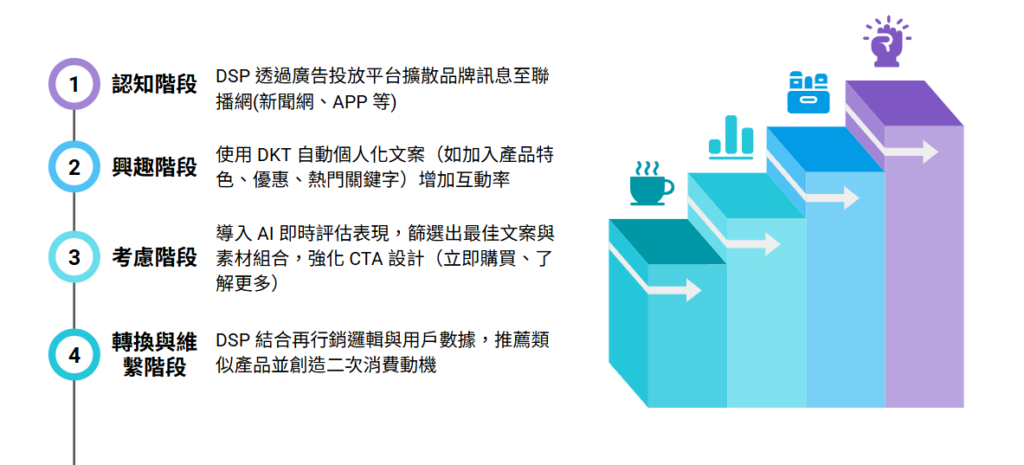
廣告策略大致上可以分成以下四個階段:
5. 小結
在AI時代下,數位廣告搭配Demand Generation行銷策略需要更主動宣傳品牌,引起消費者好奇心與共鳴,透過結合 DSP、DKT 的強大功能,有效地吸引潛在客戶,並在他們開始搜尋之前就建立品牌連結,並根據數據調整我們的策略,在競爭激烈的市場中脫穎而出。
讓你的廣告 不再靠想像