
Following the previous article introducing RTB, Direct Deals, and Programmatic Direct advertising transaction methods, how does a DSP (Demand-Side Platform) purchase ads? This article will continue to explore other Private Marketplace (PMP) advertising purchasing methods.
PMP (Private Marketplaces) operates through an exclusive invitation mechanism, meaning only advertisers invited by the media can participate in ad transactions. Media outlets typically reserve premium ad placements for PMP deals. Advertisers still need to bid via RTB, but the competition is limited to invited advertisers only. Although PMP prices are generally higher than those in the Open Auction, advertisers can better ensure their ads are displayed on trusted media platforms. Establishing long-term partnerships in this environment can also enhance the stability of ad placements.
In the previous article, we covered common Programmatic Direct methods within the PMP market, such as Programmatic Guaranteed and Preferred Deals. This article focuses on Private Auction and First-Look Deal purchasing methods.
1. Private Auction
.jpg "How Does a DSP (Demand-Side Platform) Purchase Ads? (Part 2) 2")
A Private Auction is an invitation-only programmatic advertising bidding method. Only advertisers invited by the media can participate via RTB, reducing excessive competition and increasing the chances of acquiring high-quality ad inventory.
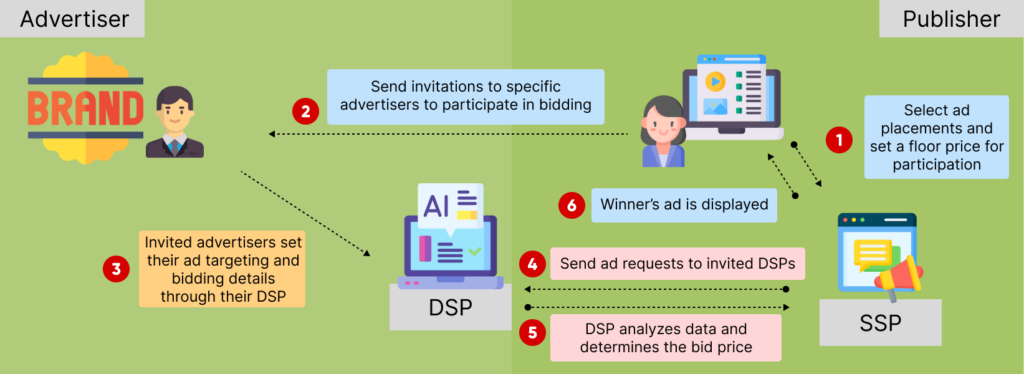
Key Features of Private Auction:
2. First-Look Deal

A First-Look Deal grants specific advertisers the opportunity to view inventory before it enters the open market, allowing them to decide whether to purchase it prior to RTB bidding. When a new ad placement becomes available, invited advertisers have the first chance to buy. If they decline, the ad slot then enters the RTB auction.
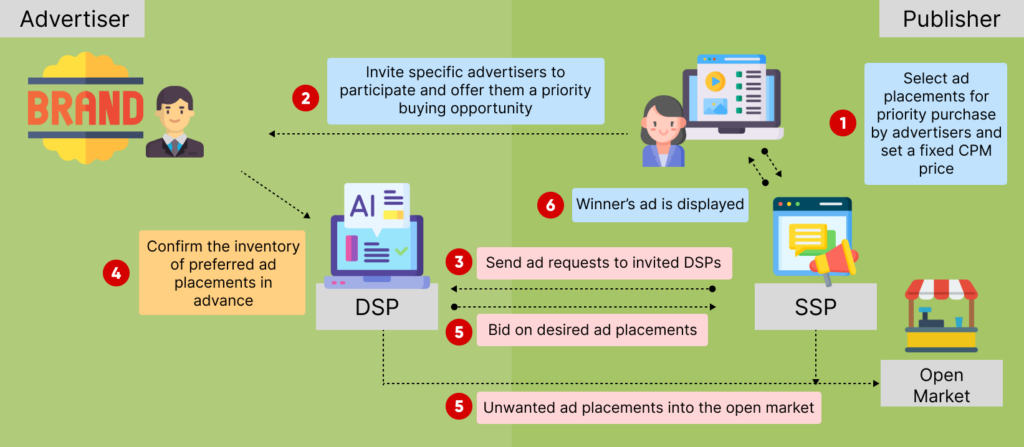
Key Features of First-Look Deal:
3. Private Auction vs. First-Look Deal
|
Feature |
Private Auction |
First-Look Deal |
|---|---|---|
|
Transaction Method |
Invited advertisers bid through RTB |
Advertisers have priority purchasing rights at a fixed price |
|
Price |
Higher than the open market, but still requires bidding |
Fixed price, usually high |
|
Brand Awareness Stability |
High |
High |
|
Number of Competitors |
Few invited advertisers participate |
Only advertisers with priority rights |
|
Flexibility |
Prices fluctuate with market competition |
Decision required within a limited time frame |
|
Guaranteed Impressions |
No |
No |
These two articles provide a brief introduction to advertising transaction methods. If you would like to learn more about the relationship between DSPs and advertising, feel free to contact us through the form below:
 EN-US
EN-US  ZH-TW
ZH-TW